
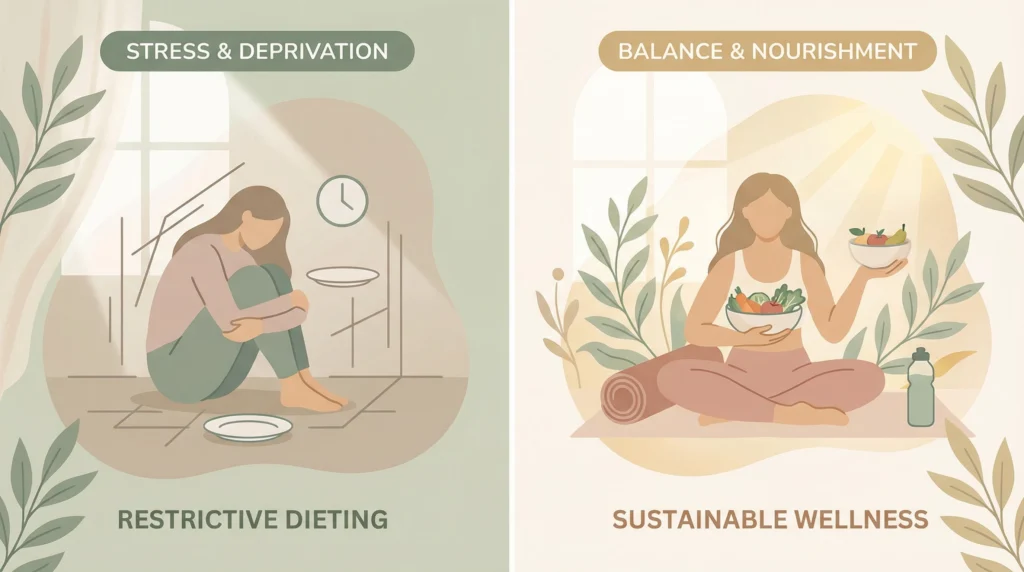
We’ve all been there. You start a Monday with a new diet – full of hope, determination, and perhaps a very green smoothie. For a few weeks, it works. The scale moves down. You feel accomplished. But then, something shifts. The cravings creep back, the weight loss stalls, and before long, you’re back where you started or even worse.
If you’ve ever lost weight only to gain it back (plus some), you’re not alone. Research shows that 95% of diets fail within five years, yet the diet industry continues to promise quick fixes and dramatic transformations. The frustrating cycle of restriction, weight loss, and inevitable regain isn’t a personal failure, it’s a predictable biological response that your body is designed to protect you.
At Gentle Wellness Club, we believe in approaching your body as a partner, not a problem to be fixed. True, lasting change doesn’t come from extreme deprivation or punishing workouts. It comes from understanding the science of your body and working with it.
Let’s explore why the diet industry wants you to fail (so you’ll keep buying their products), and how a gentle, sustainable approach can help you find peace with food and your body forever.
The Harsh Truth: Why Diets Don’t Work
The Metabolic Adaptation Response
When you drastically reduce calories, your body interprets this as a threat to survival. Within days, your metabolism begins to slow down—a process called metabolic adaptation or adaptive thermogenesis. Your body becomes more efficient at using energy, meaning you burn fewer calories at rest.
Research published in the American Journal of Clinical Nutrition shows that this metabolic slowdown can persist for years after dieting ends, making it increasingly difficult to maintain weight loss and easier to regain weight.
Hormonal Disruption from Restrictive Dieting
Extreme dieting creates a cascade of hormonal changes that work against sustainable weight loss:
Leptin Decrease: Your “fullness hormone” drops significantly, making you feel hungrier even when you’ve eaten adequate food.
Ghrelin Increase: Your “hunger hormone” elevates and stays elevated for up to a year after weight loss, driving increased appetite.
Cortisol Elevation: Chronic calorie restriction triggers your stress response, leading to elevated cortisol levels that promote fat storage, particularly around the midsection.
Thyroid Suppression: Your thyroid hormones (T3 and T4) decrease to conserve energy, further slowing your metabolism.
The Psychology of Restriction and Rebellion
The human brain is wired to rebel against restriction. When foods are labeled as “forbidden,” they become more psychologically appealing—a phenomenon researchers call the “forbidden fruit effect.” This mental preoccupation with restricted foods often leads to:
- Intense cravings for “off-limits” foods
- All-or-nothing thinking patterns
- Binge eating episodes
- Feelings of guilt and shame around food choices
- Decreased self-efficacy and confidence
The Diet Cycle: Understanding Why You Keep Starting Over
Most people who diet experience a predictable cycle that looks like this:
Phase 1: The Honeymoon Period
- Initial enthusiasm and motivation
- Rapid initial weight loss (often water weight)
- Feeling of control and accomplishment
- Social praise and positive reinforcement
Phase 2: The Struggle Begins
- Weight loss plateaus despite continued restriction
- Increased hunger and food preoccupation
- Energy levels drop
- Mood becomes affected
- Social situations become challenging
Phase 3: The Breaking Point
- Willpower becomes depleted
- “Cheat days” become more frequent
- All-or-nothing mentality intensifies
- Feelings of failure and self-criticism emerge
Phase 4: The Rebound
- Weight regain begins (often exceeding starting weight)
- Metabolism remains suppressed
- Relationship with food becomes more complicated
- Self-trust around food choices diminishes
Phase 5: The Search for the “Right” Diet
- Hope that a different approach will work
- The cycle begins again with a new set of rules
Understanding this cycle helps normalize the diet experience and shifts focus from personal failure to systematic issues with restrictive approaches.
The Harsh Truth: Why Diets Don’t Work
To understand what we should do instead, we have to first understand why the “eat less, move more” mantra is a biological dead end. Dieting isn’t just a test of willpower; it’s a battle against millions of years of human evolution.
1. Your Body Thinks a Diet Is a Famine
When you drastically cut calories, your body doesn’t realize you’re trying to fit into a wedding dress. It thinks food is scarce and that a famine is underway. To protect you from starving, it triggers a powerful set of survival mechanisms .
This is where hormones come into play. Your fat cells decrease production of leptin (the hormone that tells your brain, “You’re full, stop eating!”), while your stomach ramps up production of ghrelin (the “hunger hormone”) . Suddenly, you’re hungrier than before and you feel less satisfied after eating. You aren’t weak; your biology is actively working against you.
2. Your Metabolism Slows Down
As you lose weight, your body requires fewer calories to function—that’s normal. However, research shows that metabolism doesn’t just slow down because you’re smaller; it slows down more than expected to conserve energy. This phenomenon, often called “metabolic adaptation” or “persistent metabolic adaptation,” means that to keep losing weight, you’d have to eat fewer and fewer calories forever, which is unsustainable and unhealthy .
3. The “Set Point” Struggle
Your brain has a preferred weight range—a “set point”—that it fights to defend. When you lose weight, your brain interprets this loss as a threat and sends out biological signals to regain it . This explains why the vast majority of dieters regain the weight they lost (and often more) within a few years . The system is designed for survival, not for yo-yo dieting.
The Gentle Weight Loss Alternative: Working With Your Body
Principle 1: Nourish Don’t Punish
Instead of focusing on what to eliminate, gentle weight loss emphasizes adding nourishing foods to your daily routine:
Start Your Day with Protein: Include 20-30 grams of protein at breakfast to stabilize blood sugar and reduce cravings throughout the day.
Add Vegetables to Every Meal: Focus on increasing vegetable intake rather than restricting other foods. Vegetables provide essential nutrients and fiber that support natural satiety.
Include Healthy Fats: Don’t fear fats—they’re essential for hormone production and help you feel satisfied after meals.
Stay Hydrated: Sometimes what feels like hunger is actually thirst. Aim for half your body weight in ounces of water daily.
Principle 2: Embrace Gentle Movement
Exercise doesn’t have to be punishment for eating. Gentle movement approaches include:
Walking: A 20-30 minute daily walk can significantly improve metabolic health without triggering excessive hunger or stress responses.
Strength Training: Building and maintaining muscle mass supports healthy metabolism. Focus on 2-3 sessions per week with adequate recovery.
Yoga or Stretching: These practices reduce cortisol levels while improving flexibility and body awareness.
Activities You Enjoy: Dancing, gardening, swimming, or hiking—movement that brings joy is movement you’ll stick with long-term.
Principle 3: Prioritize Sleep and Stress Management
Poor sleep and chronic stress can sabotage weight loss efforts through hormonal disruption:
Sleep Hygiene: Aim for 7-9 hours of quality sleep per night. Create a consistent bedtime routine and optimize your sleep environment.
Stress Reduction Techniques: Practice meditation, deep breathing, journaling, or other stress-management strategies that resonate with you.
Boundary Setting: Learn to say no to commitments that create unnecessary stress and overwhelm.
Principle 4: Reconnect With Your Body’s Wisdom
Years of dieting can disconnect you from your natural hunger and fullness cues. Gentle approaches help you rebuild this relationship:
Practice Mindful Eating: Eat without distractions, chew slowly, and pay attention to how foods make you feel.
Honor Your Hunger: Respond to early hunger signals rather than waiting until you’re ravenous.
Respect Your Fullness: Learn to recognize when you’re satisfied, not stuffed.
Neutralize Food Morality: Work on removing “good” and “bad” labels from foods..
Common Mistakes That Keep You Stuck in the Diet Cycle
Mistake 1: All-or-Nothing Thinking
Many people believe they need to be “perfect” to see results. This mindset sets you up for failure because perfection is unsustainable. Instead:
- Aim for consistency over perfection
- View setbacks as information, not failures
- Celebrate small wins and progress
- Practice self-compassion when things don’t go as planned
Mistake 2: Ignoring Individual Needs
What works for your friend or favorite influencer may not work for you. Factors that affect individual needs include:
- Genetics and family history
- Medical conditions and medications
- Lifestyle and stress levels
- Age and hormonal status
- Personal preferences and cultural background
Mistake 3: Focusing Only on the Scale
Weight fluctuates daily due to various factors including water retention, hormonal changes, and digestion. Better progress markers include:
- Energy levels throughout the day
- Sleep quality and mood
- How clothes fit and feel
- Strength and endurance improvements
- Overall sense of well-being
Mistake 4: Neglecting Emotional and Mental Health
Weight loss efforts that ignore the emotional and psychological aspects of eating rarely succeed long-term. Consider:
- Working with a therapist who specializes in eating and body image
- Addressing underlying stress, trauma, or mental health concerns
- Building emotional coping strategies that don’t involve food restriction
- Developing a support system of friends and family who understand your goals
Best Practices for Sustainable, Gentle Weight Loss
Create a Supportive Environment
Stock Your Kitchen Thoughtfully: Keep nourishing foods easily accessible while limiting highly processed options that don’t serve your goals.
Plan Meals in Advance: Having a loose meal plan reduces decision fatigue and prevents last-minute choices that might not align with your goals.
Prepare for Challenging Situations: Think ahead about social events, travel, or stressful periods and have strategies ready.
Build Healthy Habits Gradually
Start Small: Choose one or two changes to implement at a time rather than overhauling everything at once.
Stack New Habits: Attach new behaviors to existing routines for better success rates.
Track Your Progress: Keep a journal of how you feel, energy levels, and other non-scale victories.
Be Patient: Sustainable changes take time to implement and show results.
Develop Body Trust and Intuition
Check In With Your Body: Regularly assess hunger, fullness, energy, and satisfaction levels.
Experiment With Foods: Notice how different foods affect your energy, mood, and digestion.
Listen to Cravings: Sometimes cravings provide valuable information about nutritional needs or emotional states.
Practice Gentle Nutrition: Make food choices that honor both your health and your satisfaction.
Frequently Asked Questions About Gentle Weight Loss
Q: How long does it take to see results with gentle weight loss approaches?
A: Unlike crash diets that promise rapid results, gentle weight loss focuses on gradual, sustainable changes. Most people notice improvements in energy, mood, and sleep within 2-4 weeks. Physical changes may take 8-12 weeks to become apparent, but these changes are more likely to be permanent.
Q: Will I lose weight as quickly with gentle methods?
A: Gentle weight loss is typically slower than aggressive dieting—usually 1-2 pounds per month rather than per week. However, research shows that people who lose weight gradually are significantly more likely to maintain their results long-term.
Q: Can I still lose weight if I don’t restrict calories?
A: Yes, many people find that focusing on food quality, eating patterns, and lifestyle factors naturally leads to a caloric balance that supports their goals without the need for explicit calorie counting or restriction.
Q: What if I have a lot of weight to lose?
A: Gentle approaches can be effective regardless of how much weight you want to lose. The key is focusing on sustainable habits that you can maintain for life rather than temporary measures that promise faster results.
Q: How do I know if I’m eating enough?
A: Signs that you’re eating adequately include stable energy throughout the day, ability to concentrate, normal sleep patterns, regular menstrual cycles (if applicable), and not feeling obsessed with food or constantly thinking about your next meal.
Q: What role does genetics play in weight loss?
A: Genetics significantly influence your natural set point, metabolic rate, and how your body responds to different foods and exercise types. While you can’t change your genetics, you can work with your individual tendencies rather than against them.
Moving Beyond Weight Loss: Focusing on Overall Wellness
Redefining Success
True wellness extends far beyond the number on the scale. Consider expanding your definition of success to include:
- Increased Energy: Feeling vibrant and energized throughout the day
- Improved Mood: Better emotional regulation and mental clarity
- Enhanced Sleep: Falling asleep easily and waking up refreshed
- Greater Strength: Physical capabilities and endurance improvements
- Better Relationships: Improved relationship with food and your body
- Reduced Health Markers: Improvements in blood pressure, cholesterol, or blood sugar levels
The Role of Body Neutrality
Instead of striving to love your body every day (which can feel inauthentic), body neutrality focuses on:
- Appreciating what your body does rather than just how it looks
- Treating your body with respect and care
- Making decisions based on how you want to feel rather than how you want to look
- Reducing the amount of mental energy spent on body criticism
Long-term Health Considerations
Gentle weight loss approaches support long-term health by:
- Maintaining metabolic health and hormone balance
- Reducing the risk of eating disorders and disordered eating patterns
- Supporting cardiovascular health through stress reduction
- Promoting better mental health and body image
- Creating sustainable lifestyle changes that benefit overall wellness
Conclusion: Embracing a Lifelong Journey of Gentle Wellness
The path to sustainable weight management isn’t found in the next revolutionary diet or extreme fitness program. It’s discovered through developing a trusting, collaborative relationship with your body and making choices that honor both your health and your humanity.
Gentle weight loss acknowledges that you are not a problem to be fixed but rather a complex, intelligent being deserving of care, respect, and nourishment. By working with your body’s natural wisdom rather than against it, you create the foundation for lasting wellness that extends far beyond the number on the scale.
As you begin or continue your wellness journey, remember that gentle doesn’t mean easy—it means sustainable, respectful, and aligned with your body’s needs. The results may come more slowly than promised by diet culture, but they’ll be infinitely more valuable because they’ll actually last.
Your body has been with you through every experience, challenge, and triumph. It’s time to treat it as the trusted partner it has always been.
Ready to start your gentle wellness journey? Subscribe to our newsletter for weekly tips, recipes, and encouragement that support your path to sustainable health without the diet mentality. Your future self will thank you for choosing gentle over extreme, sustainable over quick, and self-compassion over self-punishment.